
Foods, Drinks, and Timing That Affect Sleep
- Aug 6
- 7 min read
Most people think sleep begins the moment their head touches the pillow.
In reality, sleep often begins much earlier.
Long before you turn off the lights, your body is already making decisions about the night ahead. It’s processing your dinner, balancing your blood sugar, regulating hormones, digesting nutrients, and interpreting signals from everything you’ve eaten and drunk throughout the evening.
By bedtime, much of that work is already underway.
That’s why two people can climb into bed at the same time, in the same room, and have completely different nights of sleep. Their bodies may have received very different messages during the hours leading up to bedtime.
The good news is that improving your sleep doesn’t always require a new mattress, a sleep tracker, or an elaborate nighttime routine. Sometimes, the quality of your sleep begins with what happens around the dinner table.
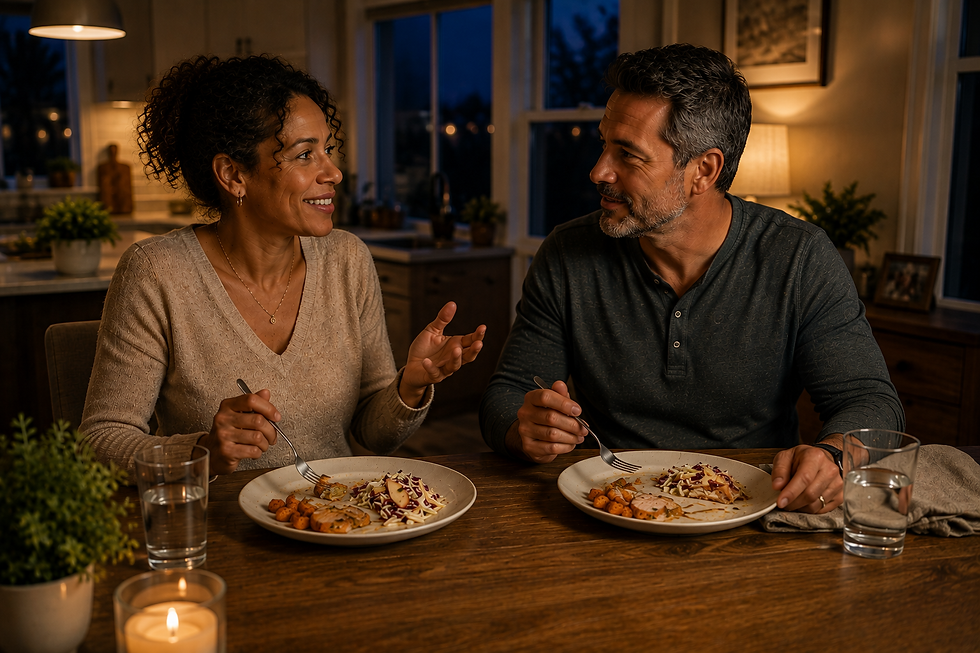
Your Evening Meal Sets the Stage
Think of your last meal as the opening chapter of your body’s overnight recovery.
After dinner, your digestive system gets to work breaking down nutrients, storing energy, repairing tissues, and preparing for several hours without food. At the same time, your brain begins transitioning from the alertness of the day toward the restoration of the night.
Large, heavy meals can make that transition more difficult. Meals high in saturated fat or heavily processed foods may take longer to digest, leaving your body working harder while you’re trying to rest. Large amounts of sugar may contribute to greater fluctuations in blood glucose during the night, which can interrupt sleep for some people.
That doesn’t mean dinner needs to be tiny. It simply means your body often sleeps best when it isn’t trying to do its most demanding digestive work while you’re trying to recover.
A balanced evening meal might include lean protein, vegetables, whole grains, healthy fats, and foods naturally rich in magnesium and potassium. These aren’t magical sleep foods. They’re simply foods that allow your body to perform its nighttime jobs without unnecessary obstacles.
Your last meal isn’t the finish line of your day. It’s the opening chapter of your night’s recovery.
Drinks Can Keep Talking After You’ve Finished Them
Some beverages continue influencing your body long after the glass is empty. Caffeine is the obvious example. Many people know coffee can interfere with sleep, but fewer realize how long caffeine remains active. Depending on the individual, its half-life averages about five hours, meaning half of the caffeine consumed late in the afternoon may still be circulating around bedtime. That evening soda, energy drink, or large iced tea may still be quietly encouraging your brain to stay alert.
Alcohol can be even more deceptive. Although it often makes people feel sleepy initially, alcohol tends to reduce sleep quality later in the night. As it’s metabolized, sleep becomes lighter and more fragmented, making it more likely that you’ll wake up feeling less refreshed despite falling asleep quickly.
Hydration matters too. Being dehydrated may contribute to muscle cramps, dry mouth, or discomfort during the night. Drinking excessive amounts of fluids immediately before bed, however, increases the likelihood of nighttime trips to the bathroom.
Your body doesn’t expect a perfect evening. It simply responds to the signals you give it. Some drinks disappear from your glass long before they disappear from your nervous system.
Timing Is More Important Than Most People Realize
Nutrition isn’t only about what you eat. It’s also about when you eat. Eating dinner just before lying down leaves little time for digestion and may increase discomfort, acid reflux, or feelings of fullness that make quality sleep more difficult. For many people, finishing dinner two to three hours before bedtime allows the digestive system to begin its work before the body fully shifts into nighttime recovery.
Consistency matters as well. Our bodies appreciate predictable rhythms. Eating dinner at wildly different times every night can make it harder for your internal clock to establish reliable patterns. If you’re genuinely hungry before bed, a light snack may be all that’s needed. Greek yogurt with berries, a banana with a small amount of peanut butter, or whole-grain crackers with cottage cheese can satisfy hunger without creating digestive overload.
As the evening winds down, your eating patterns become one more signal that the day is coming to a close. The clock can influence your digestion almost as much as the food itself.
Build an Evening Plate That Works With Your Body
Healthy sleep isn’t usually created by one magical ingredient. It’s built through combinations. A balanced evening meal might include:
Lean protein such as chicken, fish, beans, tofu, or turkey
Colorful vegetables that provide fiber, vitamins, and minerals
Whole grains like brown rice, quinoa, or sweet potatoes for steady energy
Healthy fats from foods such as avocado, olive oil, nuts, or seeds
Magnesium-rich foods including spinach, almonds, pumpkin seeds, and legumes
Potassium-rich foods like bananas, potatoes, and yogurt
Instead of chasing individual “superfoods,” think about creating meals that leave you comfortably satisfied instead of overly full or still searching the pantry an hour later. A dinner of grilled salmon, roasted vegetables, and quinoa provides protein, healthy fats, fiber, and complex carbohydrates that support both recovery and steady overnight energy.
Simple choices repeated consistently often have a greater impact than perfect meals eaten occasionally. Better sleep usually isn’t built by one remarkable food. It’s built by many ordinary choices working together.
Sleep Starts Before Bedtime
It’s easy to think of sleep as something that begins when the lights go out. Your body disagrees. By the time your head reaches the pillow, your digestive system has already been working for hours. Your hormones are adjusting. Your nervous system is responding to the signals you’ve been sending throughout the evening.
Every dinner. Every drink. Every evening routine.
They’re all part of the same conversation. Seen that way, healthy eating isn’t only about tomorrow’s energy or next month’s cholesterol numbers. It’s also about helping your body recognize that the work of today is ending—and the work of recovery is about to begin.

Food Friday Takeaway
What Message Are You Sending Your Body Tonight?
Before you eat dinner this evening, pause for just a moment. Your body doesn’t know it’s Tuesday. It doesn’t know tomorrow’s schedule or what time your alarm will ring. What it does understand are the signals you send it.
The food you choose, the drinks you pour, and even when you sit down to eat all become part of the conversation your body uses to prepare for the night ahead.
As you begin your meal tonight, ask yourself one simple question: “What message am I sending my body tonight?”
You don’t need a perfect answer.
Simply recognizing that your evening choices help shape tomorrow’s recovery is often the first step toward sleeping—and feeling—just a little better.
One Last Thought for the Week (Answer Below)
Which of the following best reflects the main lesson from today’s article?
A. Eating one “sleep food” before bed is the most effective way to improve sleep.
B. Sleep quality is influenced only by what you eat during the hour before bedtime.
C. Your food, drinks, and meal timing begin influencing your body’s overnight recovery hours before you go to bed.
D. Avoiding all evening snacks is the healthiest approach for everyone.
Recipe of the Week

Herb-Grilled Pork Tenderloin with Apple Slaw & Roasted Sweet Potatoes
Why we like it: This week’s article explored how your body begins preparing for sleep long before your head reaches the pillow. This meal reflects that idea without trying to be a “sleep recipe.” Lean pork provides satisfying protein, roasted sweet potatoes offer steady carbohydrates, and the crisp apple slaw adds fresh flavor and fiber. Together, they create a balanced dinner that’s filling without feeling overly heavy—exactly the kind of evening meal that supports your body’s overnight recovery.
Ingredients
For the Pork
1 pork tenderloin (about 1–1¼ pounds)
2 tablespoons olive oil
1 teaspoon garlic powder
1 teaspoon dried rosemary
1 teaspoon dried thyme
½ teaspoon paprika
Salt and black pepper to taste
For the Sweet Potatoes
2 medium sweet potatoes, peeled and cubed
1 tablespoon olive oil
½ teaspoon smoked paprika
Salt and pepper
For the Apple Slaw
2 cups shredded cabbage (green or a mix of green and purple)
1 crisp apple, thinly sliced (Honeycrisp or Gala work well)
2 tablespoons plain Greek yogurt
1 tablespoon apple cider vinegar
1 teaspoon honey
1 teaspoon Dijon mustard
Fresh parsley, chopped (optional)
Directions
Toss the sweet potatoes with olive oil, paprika, salt, and pepper. Roast at 425°F for 25–30 minutes, turning halfway through.
Rub the pork tenderloin with olive oil and seasonings. Grill over medium-high heat for 18–22 minutes, turning occasionally, until the internal temperature reaches 145°F. Let it rest for 5 minutes before slicing.
While the pork cooks, whisk together the yogurt, vinegar, honey, and Dijon. Toss with the cabbage and apple slices.
Slice the pork into medallions and serve alongside the roasted sweet potatoes and fresh apple slaw.
Preparation Tip
The apple slaw can be prepared several hours in advance and refrigerated. Add the apples just before serving to keep them crisp and fresh.
The EAGLE Takeaway
Healthy eating doesn’t require special ingredients or complicated recipes. Often, it’s simply about building balanced meals that satisfy your appetite while giving your body the nutrients it needs to recover. This dinner demonstrates that supporting better sleep can begin with ordinary choices made around the dinner table.
Estimated Nutrition (Per Serving)
Calories: ~520
Protein: 37 g
Carbohydrates: 34 g
Fiber: 6 g
Sugars: 12 g
Fat: 24 g
Saturated Fat: 5 g
Sodium: ~360 mg
Nutrition values are estimates and may vary depending on specific ingredients and brands used.
! Allergy Warning !
Contains: Milk (Greek yogurt).
Substitutions:
Use a dairy-free yogurt to make the slaw dairy-free.
Omit the honey or substitute maple syrup if preferred.
For additional information about EAGLE’s safety guidelines, policies, and terms of use, please see the links below the references for this article.
One Last Thought Answer:
C. Many people think sleep begins when they climb into bed. In reality, your body has already been responding to the food, drinks, and timing of your evening for hours. Those choices become signals that help prepare your body either for recovery or for continued alertness.
References:
St-Onge MP, Mikic A, Pietrolungo CE. Effects of Diet on Sleep Quality. Advances in Nutrition. 2016;7(5):938–949. https://doi.org/10.3945/an.116.012336
American Academy of Sleep Medicine. Healthy Sleep Habits. American Academy of Sleep Medicine. https://aasm.org/resources/healthy-sleep/
National Institutes of Health, Office of Dietary Supplements. Magnesium Fact Sheet for Health Professionals.https://ods.od.nih.gov/factsheets/Magnesium-HealthProfessional/
Centers for Disease Control and Prevention. About Sleep. https://www.cdc.gov/sleep/
Harvard T.H. Chan School of Public Health. The Nutrition Source: Healthy Eating Plate.https://www.hsph.harvard.edu/nutritionsource/healthy-eating-plate/
Missed an article?
Disclaimers | Privacy Policy | Terms and Conditions


