
Beyond Salt: What Really Supports a Healthy Heart
- 5 days ago
- 8 min read
For decades, eating for your heart has often sounded surprisingly simple. Watch your salt. Buy the low-sodium version. Put the salt shaker away. Those recommendations became so familiar that many of us now judge an entire meal by a single number on the nutrition label. If the sodium looks reasonable, we assume we’re making a heart-healthy choice. If it looks high, we feel as though we’ve already failed before taking the first bite.
There is good reason sodium receives so much attention. Consistently consuming too much sodium can contribute to high blood pressure, and high blood pressure is one of the leading risk factors for heart disease.¹ But somewhere along the way, an important idea quietly disappeared. We began treating sodium as though it were the entire conversation instead of one participant in a much larger one. That subtle shift changes not only how we shop for food, but also how we think about protecting one of the hardest-working organs in our bodies.
The heart, however, never experiences sodium by itself. It experiences dinner.
That may sound like a small distinction, but it changes almost everything. Your cardiovascular system doesn’t separate the potatoes from the vegetables, the fiber from the fat, or the potassium from the sodium before deciding how to respond. It experiences the entire environment your meal creates. Once you begin looking at food through that lens, you stop asking whether one ingredient is “good” or “bad” and begin asking a much more useful question: What kind of environment is this meal creating for my heart?

The Heart Lives in an Environment, Not a Checklist
Imagine walking into two different rooms. One is cool, quiet and comfortable. The other is hot, crowded and noisy. You haven’t changed, but your experience changes because the environment around you has changed. Your heart operates in much the same way. Every meal contributes to an internal environment that either makes your cardiovascular system’s job a little easier or a little more demanding.
That’s one reason nutrition research has gradually shifted away from celebrating or condemning individual nutrients in isolation. Scientists continue to study sodium because it matters, but they also recognize that blood pressure, cholesterol, inflammation, blood sugar and body weight are influenced by countless interactions taking place at the same time.² Looking at only one nutrient is a little like judging an entire orchestra by listening to a single violin. You may hear something important, but you won’t hear the music.
This explains why two meals containing similar amounts of sodium can affect your health very differently over time. One may arrive with vegetables, beans, whole grains and healthy fats. The other may consist primarily of highly processed foods that offer little else besides calories and convenience. On paper, the sodium numbers might not seem dramatically different. Inside your body, however, those meals create very different environments. The realization isn’t that sodium doesn’t matter. It’s that sodium has never been acting alone.
The Nutrients That Quietly Work Together
One of the most overlooked players in heart health is potassium. While sodium often receives the headlines, potassium helps balance many of sodium’s effects by supporting healthy blood pressure and helping blood vessels function normally.³ Interestingly, the foods richest in potassium are often the very foods many of us struggle to eat consistently—fruits, vegetables, beans and potatoes prepared in healthy ways.
Fiber tells a similar story. Most people think of fiber as something that helps digestion, yet soluble fiber also helps lower LDL cholesterol by binding to cholesterol-containing compounds in the digestive tract before they can be reabsorbed.⁴ At the same time, fiber-rich foods tend to be naturally filling, making it easier to maintain a healthy body weight without feeling deprived. One nutrient quietly begins supporting several different systems at once.
Healthy fats deserve the same reconsideration. For years, “low fat” became almost synonymous with “heart healthy.” We now understand the conversation is far more nuanced. Replacing some saturated fats with unsaturated fats—from foods such as olive oil, nuts, seeds and fish—can improve cholesterol profiles and support cardiovascular health.⁵ The heart isn’t counting how many grams of fat you ate. It’s responding to the kind of environment those fats help create inside your bloodstream.
Seen individually, potassium, fiber and healthy fats may appear to have separate jobs. Together, they reveal something much more interesting. Heart-healthy eating isn’t built by chasing isolated nutrients. It’s built by allowing many helpful nutrients to work together in ways that no single food ever could.
Why Dietary Patterns Outperform Perfect Meals
This helps explain why researchers consistently recommend dietary patterns rather than perfect foods. The DASH eating plan and the Mediterranean-style pattern have earned strong reputations not because they eliminate one harmful ingredient, but because they repeatedly create an internal environment that supports healthy blood pressure, cholesterol and overall cardiovascular function.² ⁶
That idea also removes an enormous amount of unnecessary pressure. If heart health depended on every individual meal being perfect, most of us would feel like we failed several times each week. Real life includes birthday dinners, vacations, pizza nights and meals grabbed between meetings. A healthy eating pattern has room for those moments because patterns are measured across months and years, not Tuesday afternoon.
Think about your last seven dinners instead of your last one. Without remembering exact nutrition labels, you probably already know whether vegetables appeared regularly, whether whole foods showed up more often than highly processed ones, and whether most meals left you feeling energized or sluggish afterward. Long before we calculate nutrients, our habits usually tell the story.
Perhaps that’s why dietary patterns are so powerful. They shift our attention away from trying to win every meal and toward creating a direction that our heart experiences day after day.
Looking Beyond the Salt Shaker
None of this means sodium suddenly becomes unimportant. For many people—especially those with high blood pressure—reducing excessive sodium remains a valuable part of protecting cardiovascular health.¹ The problem isn’t the advice itself. The problem is believing the advice is complete.
If lowering sodium becomes your only strategy, it’s entirely possible to buy lower-sodium frozen dinners, lower-sodium snacks and lower-sodium processed foods while still missing many of the nutrients your heart depends on. You successfully removed one challenge without necessarily adding many of the things that help your cardiovascular system thrive. The label changed, but the environment may not have changed nearly as much as you hoped.
The next time you prepare dinner, glance at the sodium if you wish. Then look beyond it. Ask where the fiber is coming from. Notice whether there’s a potassium-rich food on the plate. Consider the kind of fat used to prepare the meal. Pay attention to how much of your dinner still resembles the food it came from before it entered a factory. Those questions don’t replace the sodium conversation. They simply finish it.
Heart health has never been hiding inside a single nutrient. It has always been emerging from the relationships between many of them. Once you notice that, you stop trying to outsmart one ingredient and start building meals that quietly work together in your favor.

Food Friday Takeaway
What Kind of Environment Are You Creating?
The next time you prepare a meal or snack, resist the urge to judge it by one number or one ingredient. Instead, step back and look at the whole plate. Is there something that brings color? Something that adds fiber? Something that came from the ground instead of a factory? Something that works alongside the rest rather than trying to do all the work by itself?
You don’t have to build a perfect meal. Just notice whether you’re creating an environment that gives your heart a little more support than it had yesterday. Because heart health rarely changes through one extraordinary choice. It grows from the ordinary ones that quietly begin working together.
One Last Thought for the Week (Answer Below)
Which statement best captures the main idea of today’s article?
A. Heart health is mostly about eating as little sodium as possible.
B. Potassium is more important than sodium for protecting your heart.
C. Your heart responds to the overall environment your eating pattern creates—not any single nutrient by itself.
D. As long as you eat vegetables every day, sodium doesn’t matter.
Recipe of the Week
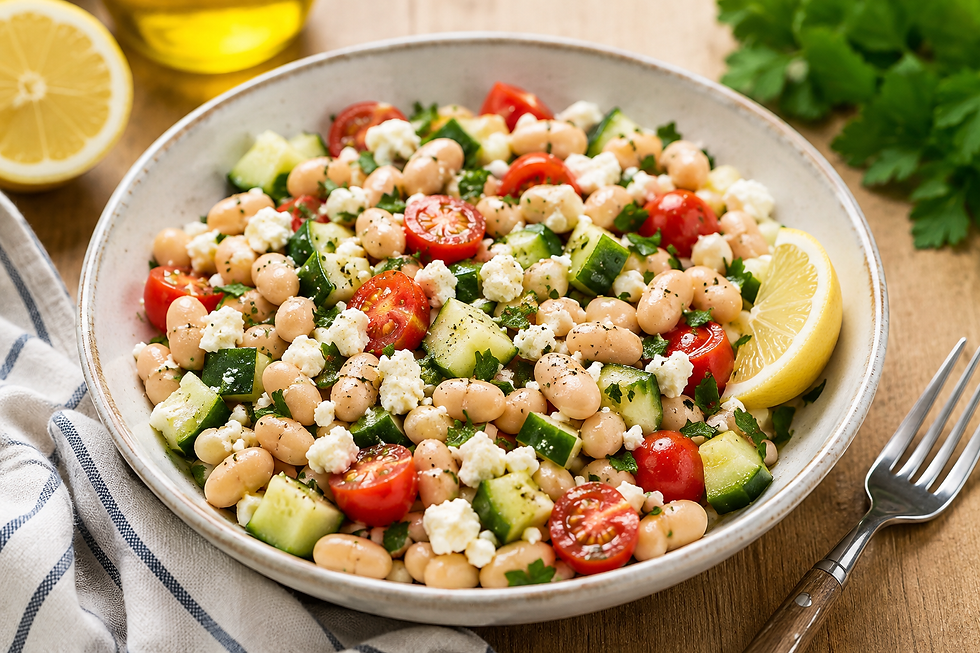
Mediterranean White Bean Snack Bowl
Why we like it: This week’s article explored the idea that your heart doesn’t respond to one nutrient at a time—it responds to the overall environment your meals create. This simple snack bowl brings that idea to life. Instead of relying on one “superfood,” it combines a handful of everyday ingredients that work well together, making it an easy choice for lunch, an afternoon snack, or even a light dinner.
Ingredients (2 servings)
1 (15-ounce) can no-salt-added cannellini or great northern beans, drained and rinsed
1 cup cucumber, diced
1 cup cherry tomatoes, halved
¼ cup crumbled feta cheese (optional)
2 tablespoons chopped fresh parsley
1 tablespoon extra-virgin olive oil
1 tablespoon fresh lemon juice
Freshly ground black pepper, to taste
Directions
In a medium bowl, combine the beans, cucumber, cherry tomatoes, parsley and feta cheese, if using.
Drizzle with the olive oil and fresh lemon juice.
Gently toss until everything is evenly coated.
Finish with freshly ground black pepper and serve immediately, or chill for 15–20 minutes for even more flavor.
Preparation Tip
Make a double batch and store it in an airtight container for up to three days. The flavors continue to develop in the refrigerator, making it an easy grab-and-go lunch or snack during the week.
The EAGLE Takeaway
This bowl reflects the article’s message in a practical way. The beans provide fiber and potassium, the vegetables add even more fiber and naturally occurring nutrients, and the olive oil contributes heart-friendly unsaturated fats. No single ingredient carries the meal. Together, they create a balanced combination that supports the kind of eating pattern your cardiovascular system benefits from over time.
Estimated Nutrition (Per Serving)
Calories: ~240
Protein: 10 g
Carbohydrates: 25 g
Fiber: 8 g
Sugars: 4 g
Fat: 12 g
Saturated Fat: 2.5 g (about 1 g without feta)
Sodium: ~220 mg (about 80 mg without feta, depending on the beans used)
Nutrition values are estimates and may vary depending on specific ingredients and brands used.
! Allergy Warning !
Contains: Milk (if prepared with feta cheese)
Substitutions:
Omit the feta for a dairy-free version.
Add diced avocado for extra creaminess while keeping the recipe dairy-free.
Sprinkle with toasted pumpkin seeds or chopped walnuts for additional crunch.
For additional information about EAGLE’s safety guidelines, policies, and terms of use, please see the links below the references for this article.
One Last Thought Answer:
C. Sodium remains an important part of heart health, particularly for managing blood pressure. But your cardiovascular system doesn’t experience nutrients one at a time—it responds to the overall pattern your meals create. That’s why foods rich in fiber, healthy fats, fruits, vegetables and whole grains work together to support your heart rather than relying on one “magic” nutrient.
References:
American Heart Association. Shaking the salt habit to lower high blood pressure. American Heart Association. Updated March 31, 2026. Accessed August 13, 2026. https://www.heart.org/en/health-topics/high-blood-pressure/changes-you-can-make-to-manage-high-blood-pressure/shaking-the-salt-habit-to-lower-high-blood-pressure
National Heart, Lung, and Blood Institute. DASH eating plan. National Institutes of Health. Updated February 25, 2026. Accessed August 13, 2026. https://www.nhlbi.nih.gov/health/dash-eating-plan
American Heart Association. A primer on potassium. American Heart Association. Accessed August 13, 2026. https://www.heart.org/en/healthy-living/healthy-eating/eat-smart/sodium/potassium
U.S. Food and Drug Administration. Questions and answers on dietary fiber. U.S. Food and Drug Administration. Accessed August 13, 2026.
Lichtenstein AH, Khera A, Anderson CAM, et al. 2026 dietary guidance to improve cardiovascular health: a scientific statement from the American Heart Association. Circulation. Published online March 31, 2026. doi:10.1161/CIR.0000000000001435
American Heart Association. The American Heart Association diet and lifestyle recommendations. American Heart Association. Reviewed March 31, 2026. Accessed August 13, 2026. https://www.heart.org/en/healthy-living/healthy-eating/eat-smart/nutrition-basics/aha-diet-and-lifestyle-recommendations
Missed an article?
Disclaimers | Privacy Policy | Terms and Conditions


