top of page

All Posts

When sleep feels off, most people look at their habits — stress, caffeine, or screen time. Those absolutely matter. But there’s another factor that often gets overlooked: the space you sleep in every night.


Your bedroom isn’t just where you end the day — it actively shapes how well you sleep. Light, temperature, noise, and even how your space feels can either support your body’s natural sleep rhythm or work against it.


The encouraging part? You don’t need a full overhaul. A handful of thoughtful adjustments can make your bedroom a place that naturally promotes better sleep.


Why Your Environment Plays Such a Big Role

Sleep is guided by your circadian rhythm — your internal clock. This system responds strongly to external cues, especially light and temperature. When your environment is inconsistent or stimulating, your brain receives mixed signals. But when your bedroom consistently feels calm, cool, and dark, your body begins to recognize it as a place for rest.


Over time, that consistency matters. Your brain starts to associate your bedroom with sleep, making it easier to fall asleep and stay asleep.


Start with Light: Make Darkness Work for You

Light exposure has a direct impact on melatonin, the hormone that helps regulate sleep.

Even small amounts of light — from streetlights, electronics, or hallway glow — can interfere with your ability to fall and stay asleep.


A few simple changes can help:

  • Use blackout curtains or room-darkening shades

  • Turn off or cover small LED lights

  • Switch to softer, warm-toned lighting in the evening


If you need light at night, keep it dim and warm. Bright, cool-toned light signals “daytime” to your brain, which is the opposite of what you want before bed.

Morning light matters too. Getting natural light early in the day helps reinforce your sleep-wake cycle and improves sleep quality at night.


Keep Your Bedroom Cool and Comfortable

Your body temperature naturally drops as you prepare for sleep. A cooler room supports that process. Most experts recommend keeping your bedroom somewhere between 60–67°F (15–19°C) for optimal sleep.¹


If you tend to run warm:

  • Choose breathable bedding like cotton or bamboo

  • Use lighter blankets

  • Improve airflow with a fan or ventilation


You don’t need to feel cold — just comfortable enough that your body isn’t working to cool itself down overnight.


Minimize Noise — or Make It Predictable

Noise doesn’t always wake you fully, but it can disrupt deeper stages of sleep without you realizing it. If your environment isn’t naturally quiet, consistency becomes more important than silence.


Helpful strategies include:

  • Using a fan or white noise machine

  • Trying earplugs if needed

  • Reducing inconsistent outside noise when possible


A steady, low-level sound is often less disruptive than unpredictable bursts of noise.


Make Your Bed Actually Comfortable

Comfort matters — not in a luxury sense, but in a support sense.


Your mattress and pillows should:

  • Keep your spine aligned

  • Reduce pressure points

  • Allow you to stay still without constant repositioning

If you regularly wake up sore or stiff, your setup may be part of the issue.


General guidelines:

  • Side sleepers often prefer slightly softer surfaces

  • Back sleepers typically do well with medium support

  • Your pillow should keep your neck aligned with your spine

Even small changes, like replacing an old pillow, can improve sleep quality.


Simplify the Space

A cluttered room can feel mentally “busy,” even if you don’t consciously notice it.

Your brain continues to process your environment as you wind down. Piles of laundry, work materials, or general clutter can subtly increase stress and make it harder to relax.


Aim for a space that feels calm and intentional:

  • Clear surfaces

  • Minimal distractions

  • A layout that feels open and easy


This doesn’t mean your bedroom has to feel empty — just organized in a way that supports relaxation.


Use Your Bed for Sleep — Not Everything Else

This is one of the most effective (and most ignored) sleep strategies.

If you regularly watch TV, scroll your phone, or work in bed, your brain starts to associate your bed with being awake. Instead, try to reserve your bed for sleep and intimacy only.


If you can’t fall asleep after about 20 minutes, get up and go to a dimly lit room. Do something relaxing until you feel sleepy again, then return to bed.

This helps retrain your brain to connect your bed with sleep — not frustration or stimulation.


Pay Attention to Air and Scent

Your environment isn’t just visual — it’s sensory. Clean, fresh air can make a noticeable difference in how comfortable your room feels. If possible:

  • Keep air circulating

  • Wash bedding regularly

  • Consider an air purifier if needed


Some people also find certain scents calming. Lavender, for example, has been associated with improved sleep quality in clinical research.²


The goal isn’t to overpower the room — just to create a subtle, relaxing atmosphere.


Be Smart About Screens

Screens are one of the biggest disruptors of a sleep-friendly environment. Phones, tablets, and TVs emit blue light, which suppresses melatonin and signals your brain to stay alert.³


A few practical adjustments:

  • Avoid screens 30–60 minutes before bed

  • Keep devices out of bed when possible

  • Use night mode or blue light filters if needed


It’s not just the light — it’s also the stimulation. Emails, news, and social media keep your brain engaged when it should be winding down.


Create a Consistent Wind-Down Environment

Consistency is what ties everything together. When your bedroom gradually shifts into a “sleep mode” each night, your body starts to anticipate rest.


This might look like:

  • Dimming the lights at the same time each evening

  • Lowering noise levels

  • Adjusting the temperature slightly


These small, repeated signals tell your brain that it’s time to power down — and over time, that transition becomes easier.


To Sum It Up...

A sleep-friendly bedroom doesn’t have to be perfect — it just needs to be consistent and supportive. When your environment aligns with your body’s natural rhythms, sleep becomes more automatic. You fall asleep faster, stay asleep longer, and wake up feeling more refreshed. In many cases, better sleep isn’t about doing more — it’s about setting up your space so your body can do what it’s designed to do.


References:

  1. Okamoto-Mizuno K, Mizuno K. Effects of thermal environment on sleep. J Physiol Anthropol. 2012;31(1):14.

  2. Lillehei AS, Halcon LL. A systematic review of the effect of inhaled essential oils on sleep. J Altern Complement Med. 2014;20(6):441–451.

  3. Chang AM, Aeschbach D, Duffy JF, Czeisler CA. Evening use of light-emitting eReaders negatively affects sleep. Proc Natl Acad Sci U S A. 2015;112(4):1232–1237.

  4. Irish LA, Kline CE, Gunn HE, Buysse DJ, Hall MH. The role of sleep hygiene in promoting public health. Sleep Med Rev. 2015;22:23–36.

  5. Harding EC, Franks NP, Wisden W. The temperature dependence of sleep. Front Neurosci. 2019;13:336.


Compiled and written by the staff at Eagle Health and Wellness, LLC.
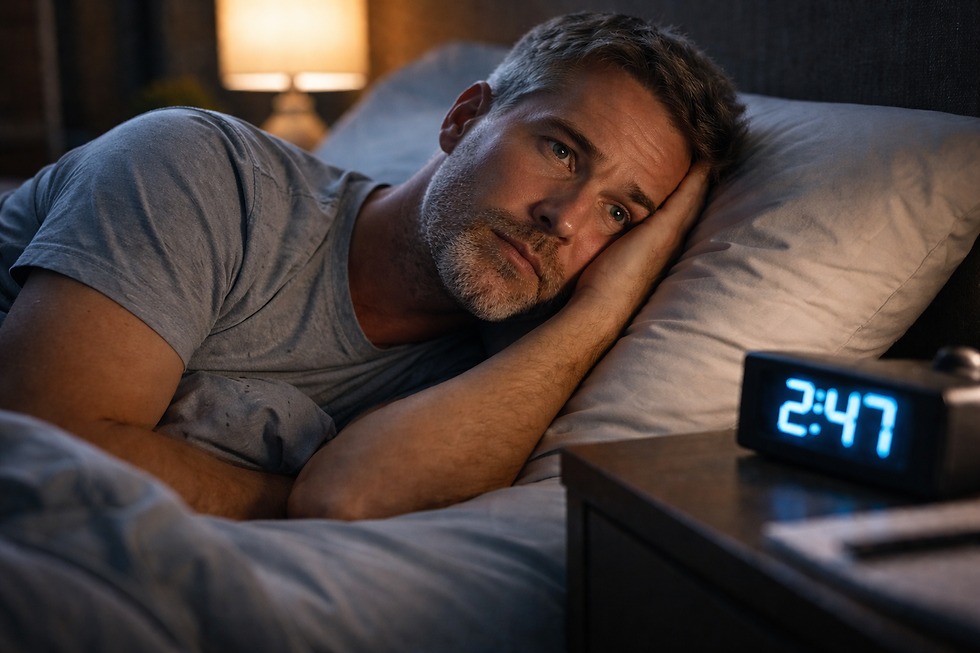


You finally get into bed, ready to relax after a long day. But instead of winding down, your mind speeds up. Thoughts jump from tomorrow’s to-do list to things you wish you’d handled differently earlier in the week. You check the clock. Then you check it again. The more you try to fall asleep, the more awake you feel.


If this sounds familiar, you’re not alone. What you’re experiencing is called sleep anxiety, and it’s more common than most people realize.


What Sleep Anxiety Really Is

Sleep anxiety isn’t just general stress—it’s anxiety about sleep itself. Over time, your brain starts to associate bedtime with pressure, frustration, or even worry. Instead of feeling like a safe place to recharge, bed becomes a place where you’re expected to perform: fall asleep, stay asleep, get enough rest.


That pressure creates a cycle. You worry about not sleeping, which makes your body more alert. That alertness makes sleep harder to achieve. And when sleep doesn’t come easily, the worry grows stronger the next night.


This loop can start subtly, but it can quickly turn into a pattern that feels hard to break.


Why It Happens

At its core, sleep anxiety is tied to how your body responds to perceived stress. Your nervous system is constantly shifting between two modes: one that keeps you alert and ready for action, and one that allows you to rest and recover. Sleep requires the second state—but anxiety activates the first.


Even if the “threat” is just a racing thought, your brain responds as if it needs to stay awake and vigilant. From a biological standpoint, this makes sense. But in modern life, it often works against you.


Another factor is effort. Sleep is one of the few things that becomes more difficult the harder you try. Once you start thinking, I need to fall asleep right now, your brain interprets that urgency as pressure. That pressure increases mental activity, which delays sleep even more.


Over time, your brain begins to form associations. Bedtime becomes linked with frustration. Lying down triggers overthinking. This is known as conditioned arousal, and it’s one of the key reasons sleep anxiety can persist even when you’re physically tired.


Many people also become highly aware of their internal state—monitoring their breathing, heart rate, or whether they feel “sleepy enough.” While it may seem helpful, this kind of monitoring actually keeps the brain engaged when it should be letting go.


How It Shows Up

Sleep anxiety doesn’t look exactly the same for everyone, but there are some common patterns. You might notice your mind racing the moment your head hits the pillow, or a sense of urgency about needing to fall asleep quickly. Some people find themselves repeatedly checking the clock, calculating how much sleep they have left. Others feel physically tense—tight shoulders, a clenched jaw, or a restless body.


A common clue is that sleep improves in a different environment, like a hotel or vacation setting. That shift often means your body can sleep—it just hasn’t felt relaxed in your usual routine.


Why It Matters

Poor sleep is frustrating on its own, but sleep anxiety can affect more than just your nights. It often leads to daytime fatigue, difficulty concentrating, and increased irritability. Over time, it can raise overall stress levels and make it harder to recover physically and mentally.


Perhaps most importantly, it can change how you feel about bedtime. When sleep becomes something you dread, the cycle tends to deepen.


What Actually Helps

The goal with sleep anxiety isn’t to force sleep—it’s to change your relationship with it.


One of the most effective shifts is letting go of the need to “make” sleep happen. Instead of approaching bedtime with pressure, it helps to focus on rest. If you find yourself lying awake for an extended period, getting out of bed and doing something calm in low light can actually help reset the association between your bed and sleep.


Creating a consistent wind-down routine also makes a meaningful difference. Your brain needs time to transition, and a buffer period before bed—free from stimulation, bright lights, and work-related thinking—gives your body the signal that it’s safe to relax.


Reducing clock-watching is another small but powerful change. Constantly checking the time tends to fuel anxiety, especially when your mind starts calculating how little sleep you might get. Turning the clock away removes that trigger.


If your thoughts tend to race at night, it can help to get them out of your head before bed. Writing down tasks, concerns, or anything unresolved gives your brain permission to stop holding onto them.


There’s also a technique called paradoxical intention, where instead of trying to fall asleep, you gently allow yourself to stay awake. This removes the pressure that often keeps sleep from happening in the first place.


And while it may be tempting to sleep in after a rough night, keeping a consistent wake-up time is one of the most effective ways to stabilize your sleep long-term. It strengthens your body’s natural rhythm and builds the pressure needed for better sleep the following night.


When to Get Additional Support

If sleep anxiety becomes a regular pattern, structured support can help. The most effective, research-backed approach is Cognitive Behavioral Therapy for Insomnia (CBT-I). This method focuses on changing the thoughts and behaviors that keep the cycle going, rather than just treating the symptoms.


To Sum It Up

Sleep anxiety can make something that should feel natural start to feel complicated. But your body hasn’t lost the ability to sleep—it’s simply learned to associate bedtime with stress.


With the right adjustments—less pressure, more consistency, and a calmer approach—you can retrain that association. And once that happens, sleep tends to come more naturally again.


References:

  1. American Academy of Sleep Medicine. International Classification of Sleep Disorders. 3rd ed. Darien, IL: American Academy of Sleep Medicine; 2014.

  2. Morin CM, Benca R. Chronic insomnia. Lancet. 2012;379(9821):1129–1141.

  3. Espie CA. Insomnia: conceptual issues in the development, persistence, and treatment of sleep disorder in adults. Annu Rev Psychol. 2002;53:215–243.

  4. Harvey AG. A cognitive model of insomnia. Behav Res Ther. 2002;40(8):869–893.

  5. Edinger JD, Means MK. Cognitive-behavioral therapy for primary insomnia. Clin Psychol Rev. 2005;25(5):539–558.


Compiled and written by the staff at Eagle Health and Wellness, LLC.


For many people, an evening drink feels like a natural way to unwind. A glass of wine after dinner, a beer while watching a game, or a nightcap before bed—it’s often seen as a way to relax and ease into sleep.


And to be fair, alcohol can make you feel sleepy.


But here’s the part most people miss:

Falling asleep faster doesn’t mean you’re sleeping better.


In fact, alcohol often does the opposite—it disrupts the quality of your sleep, especially in the second half of the night. Over time, that can affect your energy, mood, recovery, and overall health.


Let’s walk through what’s really happening.


How Alcohol Affects Your Brain at Night

Alcohol works as a depressant, slowing down activity in your central nervous system.¹ Early on, this creates a calming, sedative effect. Your body relaxes, your mind quiets down, and you may drift off more easily than usual.


That’s exactly why alcohol is often mistaken for a sleep aid.


But what’s happening beneath the surface tells a different story. Instead of supporting natural sleep, alcohol actually alters your sleep architecture—the normal pattern your body cycles through each night.²


What Happens While You Sleep

Sleep isn’t one steady state. It moves through cycles that include light sleep, deep sleep, and REM sleep, each serving a different purpose. Deep sleep helps your body recover physically, while REM sleep supports memory, learning, and emotional balance.


Alcohol disrupts this rhythm in a predictable way.


During the first half of the night, its sedative effect can increase deep sleep and suppress REM sleep.² This might sound beneficial at first, but it’s short-lived. As your body begins to process the alcohol, the balance shifts. The second half of the night often becomes lighter and more fragmented, with more awakenings and a rebound in REM sleep that can lead to vivid or restless dreaming.²


So while you may fall asleep quickly, the overall quality of your sleep tends to suffer.


Why You Wake Up in the Middle of the Night

If you’ve ever had a drink in the evening and then found yourself awake at 2:00 or 3:00 in the morning, there’s a reason for it.


As alcohol is metabolized, its sedative effects wear off. At the same time, your nervous system becomes more active.³ This shift can increase your heart rate and make your body feel more alert at the exact time you want to stay asleep.


The result is often restlessness, brief awakenings, or long stretches of being awake in the middle of the night.


In simple terms, alcohol may help you fall asleep—but it often makes it harder to stay asleep.


The Impact on Sleep Quality

One of the most important stages of sleep is deep sleep, when your body repairs tissues, regulates hormones, and recovers from physical and mental stress.


Although alcohol may increase deep sleep early in the night, that effect doesn’t last.² As the night progresses, sleep becomes more fragmented, and the overall restorative value declines.


This is why you can spend a full night in bed after drinking and still wake up feeling tired, sluggish, or not fully recovered.


REM Sleep and Mental Recovery

REM sleep plays a critical role in how your brain processes information and emotions. It’s essential for memory, focus, and mental clarity.


Alcohol suppresses REM sleep early in the night.² Later, your body tries to make up for it with what’s called REM rebound. This often leads to more intense dreaming and disrupted sleep patterns.


The end result is that your sleep becomes less consistent—and your mind doesn’t get the recovery it needs.


Breathing, Snoring, and Oxygen Levels

Alcohol also affects your breathing during sleep. It relaxes the muscles in your airway, which can increase snoring and make breathing less efficient.⁴


For people who already snore—or who may have sleep apnea—this effect can be even more significant. In some cases, it can reduce oxygen levels and further disrupt sleep quality.


Why It Becomes More Noticeable With Age

As you get older, your body becomes more sensitive to anything that disrupts sleep.


Alcohol tends to stay in your system longer due to changes in metabolism, and sleep itself becomes lighter and more fragmented over time.⁵ This combination makes it easier for alcohol to interfere with your ability to get consistent, high-quality rest.


That’s why something that didn’t seem to affect you years ago may now have a noticeable impact.


Timing Matters More Than You Think

It’s not just how much you drink—it’s when you drink.


Your body processes alcohol at a relatively steady rate, typically about one standard drink per hour. If you’re drinking close to bedtime, your body is still actively breaking down alcohol while you’re trying to sleep.


That overlap increases the likelihood of interrupted sleep and early awakenings.


Even one or two drinks late in the evening can be enough to affect your sleep quality.


A Smarter Approach

This doesn’t mean you have to eliminate alcohol entirely. But being more intentional with how and when you drink can make a noticeable difference.


Finishing your last drink at least three to four hours before bed gives your body time to process it before sleep. Keeping intake moderate and staying hydrated can also help reduce some of the negative effects.


Most importantly, it’s worth paying attention to patterns. If your sleep feels worse on nights when you drink, that’s valuable feedback.


A Simple Experiment

If you’re unsure how much alcohol is affecting your sleep, try going one week without it.


Keep everything else in your routine the same and simply observe how you feel. Many people notice that they fall asleep more consistently, wake up less during the night, and feel more refreshed in the morning.


It’s a simple way to understand how your body responds.


To Sum It Up...

Alcohol may help you fall asleep faster, but it disrupts the natural structure of your sleep throughout the night. Over time, that disruption can leave you feeling less rested—even if you’re spending enough time in bed.


Small adjustments in timing and awareness can go a long way toward improving the quality of your sleep—and how you feel the next day.


References:

  1. National Institute on Alcohol Abuse and Alcoholism. Alcohol’s effects on the body. Updated 2023. Accessed [insert date]. https://www.niaaa.nih.gov

  2. He S, Hasler BP, Chakravorty S. Alcohol and sleep-related problems. Curr Opin Psychol. 2019;30:117-122.

  3. Roehrs T, Roth T. Sleep, sleepiness, sleep disorders and alcohol use and abuse. Sleep Med Rev. 2001;5(4):287-297.

  4. Issa FG, Sullivan CE. Alcohol, snoring and sleep apnea. J Neurol Neurosurg Psychiatry. 1982;45(4):353-359.

  5. Duffy JF, Zitting KM, Chinoy ED. Aging and circadian rhythms. Sleep Med Clin. 2015;10(4):423-434.


Compiled and written by the staff at Eagle Health and Wellness, LLC.


bottom of page