top of page

All Posts

For a lot of adults, the gym has become an all-or-nothing proposition. You either commit to a complicated routine, expensive membership, crowded parking lot, and an hour-plus out of your day…or you do nothing at all.


And honestly? That mindset is one of the biggest reasons people stop moving consistently.


Life between 40 and 60 often looks very different than it did in our twenties. Careers become more demanding. Kids’ schedules dominate evenings. Energy changes. Injuries creep in. Motivation comes and goes. The idea of driving to a gym after a long day can feel less like self-care and more like another obligation.


But here’s the good news: staying active does not require a gym membership. In fact, some of the healthiest, most physically capable people in the world stay active simply because movement is built into their daily lives.¹


That’s the part modern fitness culture sometimes misses. Exercise doesn’t have to look extreme to be effective. It just has to happen consistently.


The Gym Isn’t the Goal

Somewhere along the way, fitness became heavily tied to gym culture. If you’re not lifting heavy weights, attending intense classes, or training for a race, it can feel like you’re somehow “not doing enough.” But movement and wellness are not the same thing.

Your body benefits from regular activity whether it happens inside a fitness center or not. Walking, carrying groceries, gardening, climbing stairs, stretching, yard work, biking, swimming, and even cleaning the house all contribute to physical health when done consistently.²


The human body was designed for movement throughout the day—not just one isolated hour squeezed between work and dinner. That shift in thinking can be incredibly freeing. Because once you stop viewing exercise as a performance, it becomes easier to build movement naturally into your life.


Walking Still Wins

If there were a miracle exercise for adults over 40, walking would probably be the closest thing to it. It improves cardiovascular health, supports joint mobility, helps regulate blood sugar, improves mood, lowers stress levels, and can even help preserve cognitive function as we age.³ And unlike many fitness trends, walking is sustainable for most people long term.

You don’t need perfect weather, expensive shoes, or a smartwatch. You just need to start moving.


A 10-minute walk after meals. Parking farther away. Walking during phone calls. Taking the dog around the block an extra time. These things may sound small, but small actions repeated daily create meaningful change over time. One of the biggest mistakes people make is underestimating the power of consistency because the activity itself seems “too easy.” But your body doesn’t care whether movement feels impressive. It responds to repetition.


Your Home Is Already a Fitness Space

One reason many people avoid exercise is because they think they need the “perfect setup” before they begin. They imagine they need a dedicated workout room, expensive equipment, or a carefully designed routine. In reality, some of the most effective forms of movement require almost nothing at all.


Bodyweight exercises like squats, wall push-ups, step-ups, lunges, modified planks, and chair sits can strengthen muscles, improve balance, and help maintain mobility.⁴ Resistance bands are inexpensive, easy to store, and remarkably versatile. Even five to fifteen minutes of movement matters.


That’s another myth worth breaking: if you don’t have a full hour, it’s not worth doing. Actually, research continues to show that shorter bouts of activity throughout the day can still provide meaningful health benefits.⁵ This matters because many adults don’t fail due to lack of effort. They fail because their expectations are unrealistic. If your plan only works on your “perfect” days, it’s probably not a sustainable plan.


Movement Doesn’t Need to Be Formal

Some of the healthiest people you know may never “work out” in the traditional sense. They simply stay active. They move frequently. They avoid sitting for long stretches. They spend time outdoors. They tackle projects around the house. They take the stairs without overthinking it. Modern life has quietly engineered movement out of our routines. We sit more, drive more, stream more, and scroll more than ever before.⁶


That’s why intentional movement matters now more than ever. Not because we all need six-pack abs. But because the body deteriorates surprisingly fast when it stops moving regularly. Muscles weaken. Balance declines. Stiffness increases. Energy drops. Everyday tasks become harder. And unfortunately, many people accept that decline as “just aging.” Often, it’s not aging alone. It’s inactivity.


The Mental Side Matters Too

There’s another important piece of this conversation that doesn’t get discussed enough: emotional resistance. A lot of adults carry guilt around exercise. Maybe they used to be in great shape years ago. Maybe they’ve started and stopped dozens of times. Maybe the gym environment feels intimidating now. Maybe they feel embarrassed beginning again. That emotional weight becomes exhausting.


Which is why simplifying movement can feel so powerful. You don’t need to “become a fitness person.” You just need to move your body more often than you currently are. That’s it. No public transformation. No complicated tracking apps. No punishing routines. Just progress. And ironically, once movement becomes less emotionally heavy, consistency often improves naturally.


Mobility May Matter More Than Intensity

As we get older, mobility and function become increasingly important.

  • Can you bend comfortably?

  • Can you get off the floor easily?

  • Can you carry groceries without strain?

  • Can you climb stairs without feeling wiped out?

These are real-life fitness markers that matter far more than most people realize. Simple stretching, mobility exercises, yoga, and low-impact strength work can help preserve quality of life as we age.⁷ And the best part? You don’t need elite athletic ability to benefit. You just need regular practice. For many adults, the smartest fitness approach isn’t crushing high-intensity workouts five days a week. It’s building a routine they can actually maintain for the next twenty years.


The “Perfect Time” Never Arrives

One of the biggest traps in wellness is waiting. People wait until work slows down. Until the kids grow up. Until they lose weight first. Until Monday. Until next month. Until motivation magically appears. But motivation is unreliable. Routine is what changes lives. The healthiest people are not necessarily the most disciplined. Often, they’ve simply created routines that fit realistically into their lives.

A short walk after dinner. Stretching while watching television. Using resistance bands a few mornings a week. Taking movement breaks during the workday. None of this sounds dramatic. That’s exactly why it works. Sustainable wellness is usually built through ordinary habits repeated consistently—not occasional bursts of extreme effort.


Start Smaller Than You Think

If you’ve been inactive for a while, the goal is not to overhaul your life overnight. The goal is to rebuild momentum. Start smaller than your ego wants to. Five minutes becomes ten. One walk becomes a routine. A few bodyweight exercises become strength.

The biggest mistake people make is trying to become the most motivated version of themselves immediately. Instead, focus on becoming the most consistent version of yourself. Because consistency changes the body. But more importantly, it changes identity. You stop feeling like someone “trying to get healthy.” You become someone who simply moves regularly. And that shift can quietly change everything.

To Sum It Up...

You do not need a gym membership, perfect schedule, or expensive equipment to improve your health. You simply need more consistent movement woven naturally into your everyday life. The best exercise plan is rarely the most intense one—it’s the one you’ll still be doing a year from now.


References:

  1. Booth FW, Roberts CK, Laye MJ. Lack of exercise is a major cause of chronic diseases. Compr Physiol.2012;2(2):1143-1211.

  2. Piercy KL, Troiano RP, Ballard RM, et al. The physical activity guidelines for Americans. JAMA.2018;320(19):2020-2028.

  3. Paluch AE, Bajpai S, Bassett DR, et al. Daily steps and all-cause mortality: a meta-analysis of 15 international cohorts. Lancet Public Health. 2022;7(3):e219-e228.

  4. Fragala MS, Cadore EL, Dorgo S, et al. Resistance training for older adults: position statement from the National Strength and Conditioning Association. J Strength Cond Res. 2019;33(8):2019-2052.

  5. Jakicic JM, Kraus WE, Powell KE, et al. Association between bout duration of physical activity and health. Circulation. 2019;139(11):e574-e587.

  6. Owen N, Healy GN, Matthews CE, Dunstan DW. Too much sitting: the population health science of sedentary behavior. Exerc Sport Sci Rev. 2010;38(3):105-113.

  7. American College of Sports Medicine. ACSM’s guidelines for exercise testing and prescription. 11th ed. Philadelphia, PA: Wolters Kluwer; 2021.


Compiled and written by the staff at Eagle Health and Wellness, LLC.


Most people believe they need more motivation to exercise consistently. But motivation is often the wrong thing to rely on. Motivation is emotional. It rises and falls depending on stress, sleep, work schedules, weather, energy levels, and life circumstances. Some days you feel inspired and ready to conquer the world. Other days, even putting on sneakers feels like a chore. That inconsistency is completely normal.


The problem is that many adults assume those fluctuations mean they are failing. They tell themselves:“I just need to get motivated again.” But long-term success with exercise usually has far less to do with motivation than people realize. It has far more to do with routine.


The people who stay active for years are not necessarily the most disciplined or naturally motivated. More often, they are the people who have built movement into their normal lives in a sustainable way. That distinction matters because motivation can help you start—but routine is usually what keeps you going.


Motivation Is Powerful—but Temporary

Motivation can absolutely be helpful. It often sparks the beginning of change. A health scare, vacation photo, milestone birthday, doctor’s appointment, or moment of frustration may create the emotional push someone needs to finally begin exercising. That initial excitement can feel energizing. People buy workout clothes, join gyms, create ambitious plans, and promise themselves that this time will be different. And for a while, it often works. But motivation naturally fades over time.¹ Life gets busy. Work becomes stressful. Kids need attention. Sleep suffers. Schedules change. Energy drops.


Eventually, the emotional intensity that fueled the original excitement starts to weaken. That is where many people quit—not because they are lazy or incapable, but because they built their entire fitness approach around emotion instead of consistency. Motivation was never meant to carry the full weight of long-term behavior change.


Routine Reduces Decision Fatigue

One of the biggest advantages of routine is that it reduces the number of decisions you need to make. When exercise becomes part of your normal schedule, it requires less emotional negotiation. You stop asking yourself:“Do I feel like working out today?” And instead begin operating from:“This is just what I do.” That shift is incredibly powerful. Research on habit formation consistently shows that repeated behaviors tied to routines and environmental cues are more likely to become sustainable long term.²


Think about brushing your teeth. Most people do not wait for motivation to brush their teeth. They do it automatically because it has become part of daily life. Exercise works similarly when routines are established properly. The goal is not turning movement into punishment or obligation. The goal is reducing the mental friction that often prevents consistency.


Routine Creates Stability During Stressful Seasons

One of the biggest mistakes people make is believing exercise only “counts” when life feels perfectly organized. But life rarely stays perfectly organized for long. There will always be stressful periods:

  • Busy work weeks

  • Family obligations

  • Illness

  • Travel

  • Financial stress

  • Poor sleep

  • Emotional exhaustion


If your exercise habits depend entirely on feeling motivated, those stressful seasons will usually derail consistency very quickly. Routine creates stability during those periods. That does not mean every workout needs to be intense or perfect. In fact, routine often works best when people learn how to scale movement appropriately instead of abandoning it completely.


Maybe the 60-minute workout becomes a 20-minute walk. Maybe the gym session becomes stretching at home. Maybe strength training becomes basic bodyweight exercises for a few days. Consistency matters more than perfection. People who maintain some form of movement during difficult seasons are often more successful long term than people who repeatedly stop and restart exercise altogether.³


The “All-or-Nothing” Trap

Many adults unintentionally sabotage themselves with all-or-nothing thinking. They believe exercise only matters if:

  • The workout is long enough

  • The workout is intense enough

  • The schedule is perfect

  • Weight loss happens quickly

  • Motivation feels high


That mindset creates constant pressure. And pressure often leads to burnout. Routine-based exercise tends to look much more realistic. It allows room for imperfect workouts, lower-energy days, modified schedules, and gradual progress. Ironically, this more flexible mindset often produces better long-term results because it is sustainable. The healthiest exercise routines are usually not the most extreme. They are the ones people can realistically continue for years.


Environment Matters More Than Willpower

People often assume consistency is entirely about discipline. But environment plays a massive role in behavior. Small environmental changes can make exercise feel significantly easier to maintain. For example:

  • Keeping walking shoes near the door

  • Scheduling workouts at the same time daily

  • Exercising with a spouse or friend

  • Choosing activities you genuinely enjoy

  • Preparing gym clothes ahead of time

  • Reducing barriers to movement at home


These may seem minor, but they reduce resistance and help routines become more automatic.⁴ The easier a behavior feels to start, the more likely it is to happen consistently. That is one reason overly complicated fitness plans often fail. They create too much friction. Simplicity usually wins.


Routine Builds Identity

One of the most overlooked parts of exercise consistency is identity. Over time, routines stop feeling like something you are forcing yourself to do and start becoming part of who you are. You begin thinking:

  • “I’m someone who walks every morning.”

  • “I’m someone who strength trains twice per week.”

  • “I’m someone who prioritizes movement.”


That identity shift matters. Behavior tends to become more sustainable when it aligns with how people see themselves internally.⁵ This is why small wins matter so much early on. Consistency builds confidence. Confidence reinforces identity. And identity helps strengthen routine.


Motivation Still Has a Role

None of this means motivation is useless. Motivation still matters. It can inspire change, create momentum, and help reignite focus during difficult periods. But motivation works best as a spark—not the entire engine. Routine is what keeps the engine running after the emotional excitement fades.


The healthiest long-term approach usually combines both:

  • Motivation to begin

  • Routine to sustain progress


That combination tends to create far more stability than chasing constant inspiration.


Start Smaller Than You Think

One of the biggest reasons people struggle with consistency is starting too aggressively.

Extreme workout schedules may feel exciting initially, but they are often difficult to maintain alongside real life. Smaller routines tend to survive longer.

  • A daily 15- to 20-minute walk.

  • Two strength workouts per week.

  • Stretching while watching television.

  • Parking farther away intentionally.


Those habits may seem insignificant in the moment, but repeated consistently over months and years, they can create meaningful improvements in health, energy, mobility, and quality of life. The goal is not creating a perfect routine overnight. The goal is building a realistic one you can actually maintain.


To Sum It Up...

Many people treat exercise like punishment for gaining weight, aging, or being imperfect.

But movement should improve your life—not consume it. A healthy exercise routine should help you feel stronger, more capable, more energetic, and more resilient physically and mentally. And that becomes much easier when consistency is built around routine instead of constantly waiting for motivation to appear. Because the truth is, even highly active people do not always feel motivated. They simply learned how to keep moving anyway.


References:

  1. Teixeira PJ, Carraça EV, Markland D, Silva MN, Ryan RM. Exercise, physical activity, and self-determination theory: a systematic review. Int J Behav Nutr Phys Act. 2012;9:78.

  2. Gardner B, Lally P, Wardle J. Making health habitual: the psychology of ‘habit-formation’ and general practice. Br J Gen Pract. 2012;62(605):664-666.

  3. Rhodes RE, Janssen I, Bredin SSD, Warburton DER, Bauman A. Physical activity: health impact, prevalence, correlates and interventions. Psychol Health. 2017;32(8):942-975.

  4. Kaushal N, Rhodes RE. Exercise habit formation in new gym members: a longitudinal study. J Behav Med. 2015;38(4):652-663.

  5. Phillips LA, Gardner B. Habitual exercise instigation (vs. execution) predicts healthy adults’ exercise frequency.Health Psychol. 2016;35(1):69-77.


Compiled and written by the staff at Eagle Health and Wellness, LLC.
 
 
  • May 15
  • 5 min read

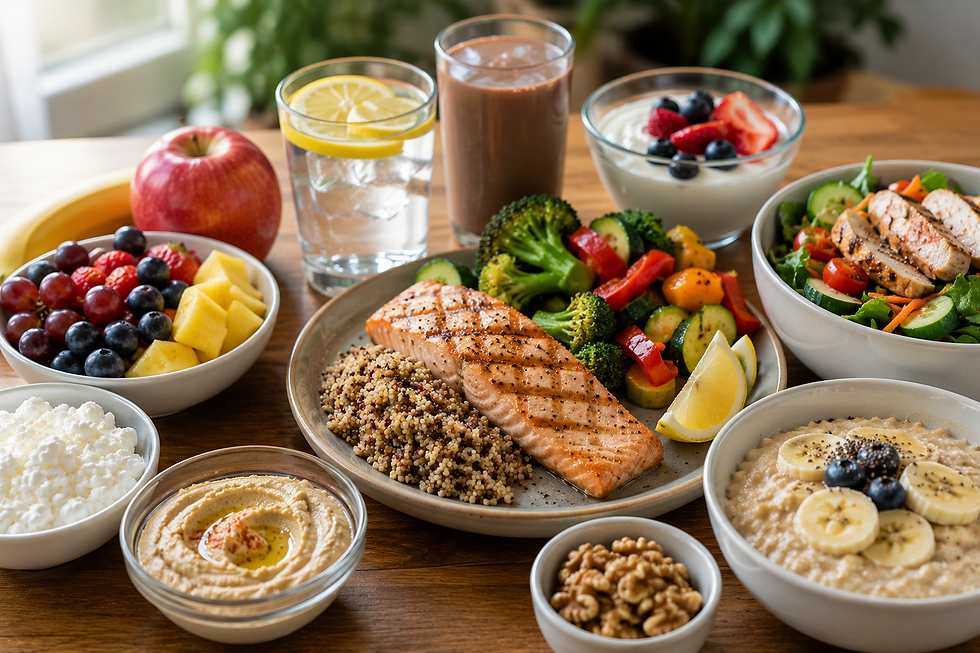
Most people think recovery starts after a workout ends. But in many ways, recovery begins with what you eat afterward.


Exercise places stress on the body—and that’s not necessarily a bad thing. Movement challenges your muscles, nervous system, and energy stores in ways that encourage the body to adapt and improve over time. Recovery is the process that allows those improvements to happen. And nutrition plays a major role in that process.


Without proper recovery, even the best workout routine can eventually leave you feeling sore, fatigued, unmotivated, or physically run down. Many adults assume they simply need more discipline or harder workouts when, in reality, their bodies may not be recovering well between sessions. Food is one of the most powerful recovery tools available. And recovery nutrition is not just for athletes or bodybuilders.


Whether you walk daily, strength train a few times a week, play recreational sports, or simply want to feel better physically, what you eat can directly influence how your body recovers and performs over time.


The encouraging part is that recovery nutrition does not need to be complicated. Most people do not need expensive supplements, perfectly timed shakes, or restrictive meal plans. More often, they simply need to consistently provide the body with the nutrients it needs to repair and recharge.


Why Recovery Matters

Recovery is where progress actually happens. During exercise, the body experiences controlled physical stress. Muscles undergo small amounts of microscopic damage, stored carbohydrates are used for energy, and fluids and electrolytes are lost through sweat. Recovery allows the body to:

  • Repair muscle tissue

  • Restore energy stores

  • Reduce inflammation

  • Rehydrate properly

  • Support immune function

  • Adapt to future physical demands


Without adequate recovery, the body can remain in a stressed state longer than it should. Over time, this may contribute to persistent soreness, reduced performance, poor sleep, low energy, and an increased risk of overuse injuries.¹ Nutrition helps move the body out of that stressed state and into recovery mode.


Protein Helps Repair and Rebuild

Protein is often the first nutrient people think about when discussing recovery—and for good reason. Protein provides amino acids, which are the building blocks your body uses to repair and rebuild muscle tissue after exercise.² Strength training, walking, cycling, recreational sports, and even physically demanding yard work can all create enough muscular stress to slightly increase protein needs. Unfortunately, many adults tend to underconsume protein throughout the day without realizing it. Breakfasts built around toast or cereal, rushed lunches, and snack-heavy evenings may leave the body without enough consistent protein intake to fully support recovery. That does not mean you need enormous amounts.


Most adults simply benefit from including a quality protein source at each meal.

Good options include eggs, Greek yogurt, chicken, fish, cottage cheese, lean beef, protein shakes, beans, tofu, edamame, and other high-protein foods that fit your preferences and lifestyle. Research also suggests that spacing protein intake throughout the day may support muscle recovery more effectively than eating most of it at dinner.³


Carbohydrates Support Energy Recovery

Carbohydrates are often unfairly criticized in the fitness world, but they play an important role in recovery. Your body stores carbohydrates in the muscles and liver as glycogen, which serves as a primary fuel source during exercise and physical activity. After activity, those stores become partially depleted. Eating carbohydrates helps replenish glycogen levels so the body has energy available for future movement and exercise.⁴ Without enough carbohydrates, people often notice:

  • Low energy

  • Increased fatigue

  • Slower recovery

  • Poor workout performance

  • Difficulty maintaining activity levels


That does not mean every meal needs to be loaded with sugar or highly processed foods. The focus should simply be on quality carbohydrate sources that also provide fiber, vitamins, and minerals. Fruit, oats, rice, potatoes, whole grains, beans, and vegetables can all support recovery while also contributing to overall health. Many people feel noticeably better physically when they stop fearing carbohydrates and start using them strategically to support activity and recovery.


Hydration Matters More Than Most People Realize

Even mild dehydration can negatively affect recovery, energy levels, and physical performance.⁵ Water helps regulate body temperature, transport nutrients, support joint health, and assist with muscle function. During exercise, fluids and electrolytes are lost through sweat—especially during warmer weather or longer workouts. Unfortunately, many adults spend much of the day mildly dehydrated without realizing it. Signs of poor hydration may include fatigue, headaches, muscle cramps, dizziness, dry mouth, and reduced exercise performance.


For most people, recovery hydration does not require expensive sports drinks or complicated formulas. Water is usually sufficient for moderate activity levels. However, longer workouts or excessive sweating may sometimes require additional electrolytes as well.

One of the simplest strategies is staying hydrated consistently throughout the day instead of trying to “catch up” later.


Recovery Depends on Overall Nutrition

Many people focus only on post-workout meals while overlooking the bigger picture. Recovery is not determined by one protein shake or a single healthy dinner. It reflects your overall nutrition habits consistently over time. The body recovers best when it regularly receives:

  • Adequate calories

  • Protein

  • Quality carbohydrates

  • Healthy fats

  • Vitamins and minerals

  • Proper hydration


Undereating can sometimes impair recovery just as much as poor food choices. This is especially common among adults aggressively trying to lose weight while simultaneously increasing exercise. If calorie intake becomes too low for too long, recovery, sleep, energy levels, and performance may all begin to suffer. The goal is not perfection. The goal is supporting the body consistently enough to recover, function, and feel better over time.


Sleep and Nutrition Work Together

It is impossible to talk about recovery without talking about sleep. Sleep is one of the body’s most important recovery tools. During sleep, the body performs significant repair processes involving muscle recovery, immune function, hormone regulation, and nervous system restoration.⁶ Nutrition and sleep also influence one another more than many people realize.

Poor eating habits may negatively affect sleep quality, while poor sleep can increase cravings, reduce energy, and make healthy food choices more difficult the next day. This is one reason recovery should always be viewed holistically rather than focusing on a single factor. Movement, nutrition, hydration, stress management, and sleep all work together.


Simple Recovery Nutrition Habits

Recovery nutrition does not need to become overwhelming. For most adults, a few simple habits can make a meaningful difference:

  • Include protein at each meal

  • Stay hydrated throughout the day

  • Eat carbohydrates that support energy and activity

  • Avoid regularly skipping meals

  • Prioritize sleep alongside nutrition


Consistency matters far more than perfection. You do not need to eat like a professional athlete to recover effectively. You simply need to give your body enough support to repair, recharge, and continue adapting positively to movement and exercise.


Recovery Is Part of the Process

Many people focus heavily on workouts while treating recovery as an afterthought. But recovery is not separate from progress. Recovery is progress. The body only becomes stronger, healthier, and more resilient when it has the opportunity—and resources—to recover properly from stress. That includes rest. That includes sleep. And yes, that absolutely includes nutrition. Eating for recovery is not about obsessing over every calorie or trying to eat perfectly at all times. It is about helping your body feel better, move better, and continue doing the things you want to do for years to come.


References:

  1. Kellmann M, Bertollo M, Bosquet L, et al. Recovery and performance in sport: consensus statement. Int J Sports Physiol Perform. 2018;13(2):240-245.

  2. Jäger R, Kerksick CM, Campbell BI, et al. International Society of Sports Nutrition position stand: protein and exercise. J Int Soc Sports Nutr. 2017;14:20.

  3. Mamerow MM, Mettler JA, English KL, et al. Dietary protein distribution positively influences 24-h muscle protein synthesis in healthy adults. J Nutr. 2014;144(6):876-880.

  4. Thomas DT, Erdman KA, Burke LM. Position of the Academy of Nutrition and Dietetics, Dietitians of Canada, and the American College of Sports Medicine: nutrition and athletic performance. J Acad Nutr Diet. 2016;116(3):501-528.

  5. Casa DJ, Armstrong LE, Hillman SK, et al. National Athletic Trainers’ Association position statement: fluid replacement for athletes. J Athl Train. 2000;35(2):212-224.

  6. Watson AM. Sleep and athletic performance. Curr Sports Med Rep. 2017;16(6):413-418.


Compiled and written by the staff at Eagle Health and Wellness, LLC.


bottom of page